

By Wa Ganyu
For Malawians at home and scattered across the world, life often feels like a passage from one struggle to the next. Yet in July and August, hope found its way into ordinary homes. The Scorchers carried the nation’s colours to the edge of African glory and, along the way, lifted the Malawi flag higher across the continent, providing a welcome distraction for their people.
The Scorchers did more than win matches at the Women’s Africa Cup of Nations(WAFCON) in Morocco. They also won hearts and gave supporters a glimpse of what is possible in a country often caught between social and economic hardships.
On their arrival, the Scorchers commanded an airport party that no sport in Malawi has ever commanded. People poured into Kamuzu International Airport from near and far, using their own resources, dancing, drinking, and waiting for a glimpse of the victorious women.
Thousands of others lined up the streets from the airport, which was over 26 km from Lilongwe Capital Hotel, such that a normally 30-minute trip took the scorchers 4 hours, with soldiers parading half the way.
“The girls made the nation believe again,” said one woman who had travelled all the way from Dedza to welcome the girls on their triumphant arrival from Morocco, with silver medals on their chests.
For many Malawians, the achievement felt like the reward for years of persistence. This was not a team built overnight. It was the product of gradual progress, setbacks overcome, and belief cultivated within a squad that learned to compete on a bigger stage.
“I think many people didn’t know this team until they started winning at WAFCON”, said Prince Jere, a Lilongwe resident. “But they’ve been here, played together, lost many times and won the COSAFA and the qualifiers to make it to Morocco”.
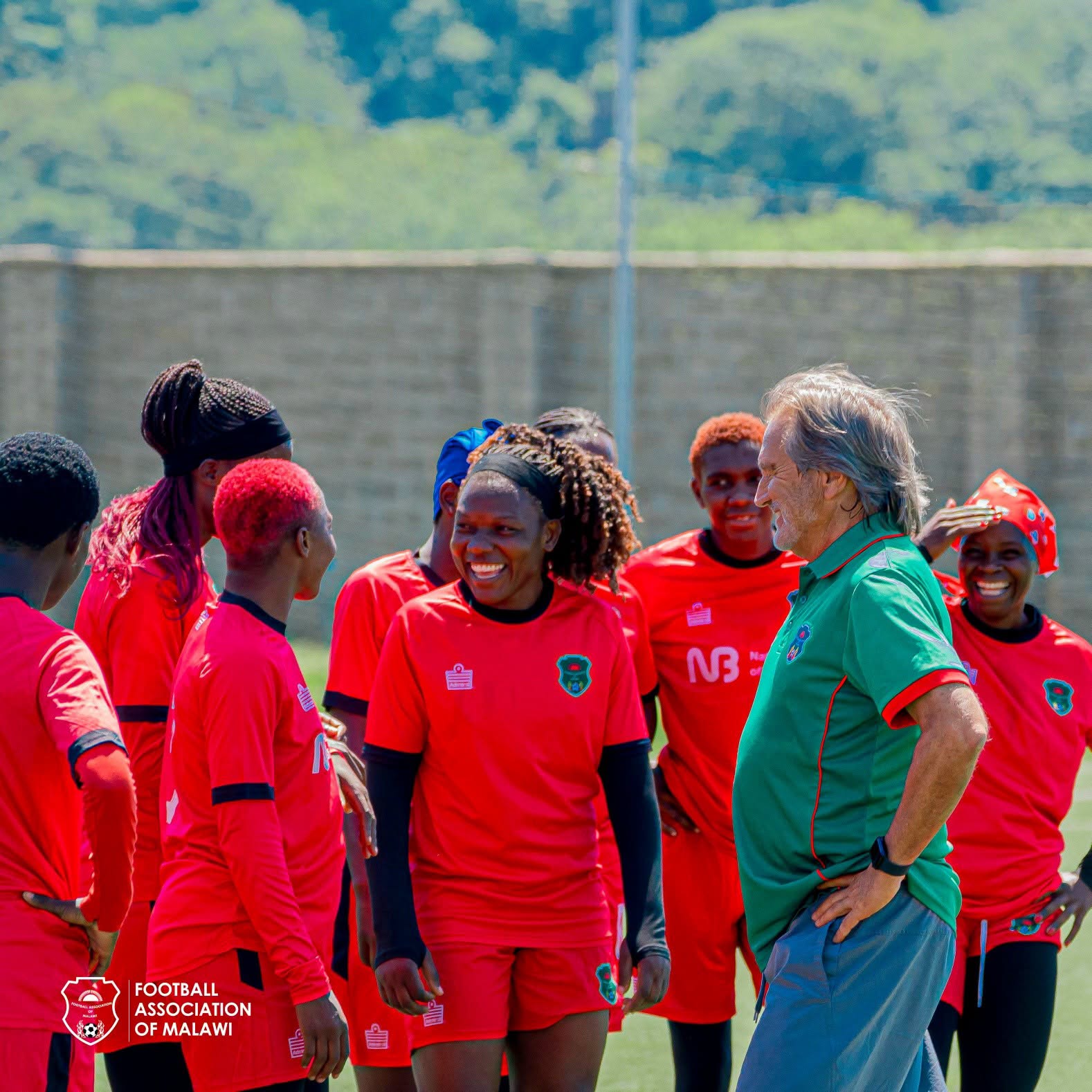
That history makes the Football Association of Malawi’s decision to demote Lovemore Fazili to assistant coach behind 70-year-old American Randy Waldrum all the more significant.
The announcement came as a surprise to many supporters. The FA cited Fazili’s lack of a CAF A Licence as the reason for the change, even though it confirmed he had been admitted to the course. Instead of continuing in the top role, he was reassigned as deputy coach.
The reaction was immediate and divided.
While some viewed the decision as a necessary upgrade for a team with ambitions of competing consistently among Africa’s elite and to make their name at the coming World Cup in Brazil, others saw it as a difficult and perhaps poorly timed decision involving a coach who helped guide the team to its greatest achievements thus far.
Whatever the case, the Football Association made its decision, citing Fazili’s lack of qualifications, but assured him of an air ticket to Brazil and a seat in the technical area.
Now the responsibility shifts to Randy Waldrum. The American arrives with a reputation forged at the highest levels of women’s football. His résumé naturally raises expectations, but it also increases scrutiny.
Waldrum guided Nigeria’s Super Falcons to the Round of 16 at the 2023 FIFA Women’s World Cup. Previously, he also managed the Houston Dash in the United States’ National Women’s Soccer League, the Trinidad and Tobago women’s national team, and the prestigious Notre Dame Fighting Irish women’s soccer program.
Unlike his predecessor, Waldrum will not be judged on potential. That Malawians have seen. He will be judged on results.
Supporters will expect a team that is better organised, particularly in defence, an area he has already identified for improvement. They will expect tactical growth, stronger game management and the consistency required to compete against the world’s best.
“I am a very attack-minded coach. I love to control the game through possession. You will see more structure and discipline in the way the team defends. I feel like the team at WAFCON was too open, so that one will be addressed,” said Waldrum.
The 70-year-old coach noted that while a complete transformation of the team’s identity will be a long-term project, defensive organisation will be the most immediate priority as they prepare for the elite competition of the World Cup.
“One thing that you will see change the quickest is the defensive structure of the team because it is most important in the next stage,” Waldrum added. “After the World Cup, you will see a big change in the way the team plays.”
But expectations can be a double-edged sword. His counterpart, Kallisto Pasuwa, who is coaching the Malawi men’s team, Flames, can attest to this.
This is no longer a team trying to surprise opponents. The Scorchers have announced themselves. Future opponents will prepare differently. The underdog label has largely disappeared. With that comes a new burden: proving that their success was not one wet dream of the summer.
This challenge extends beyond the head coach.
Waldrum’s appointment is an ambitious statement from the Football Association, but ambition alone does not win football matches. High-profile appointments require equally professional support structures.
The FA must continue providing the conditions necessary for success. Reliable logistics, proper preparation camps, clear communication and a stable technical environment. Without those foundations, even the most experienced coach will struggle to deliver on expectations.